
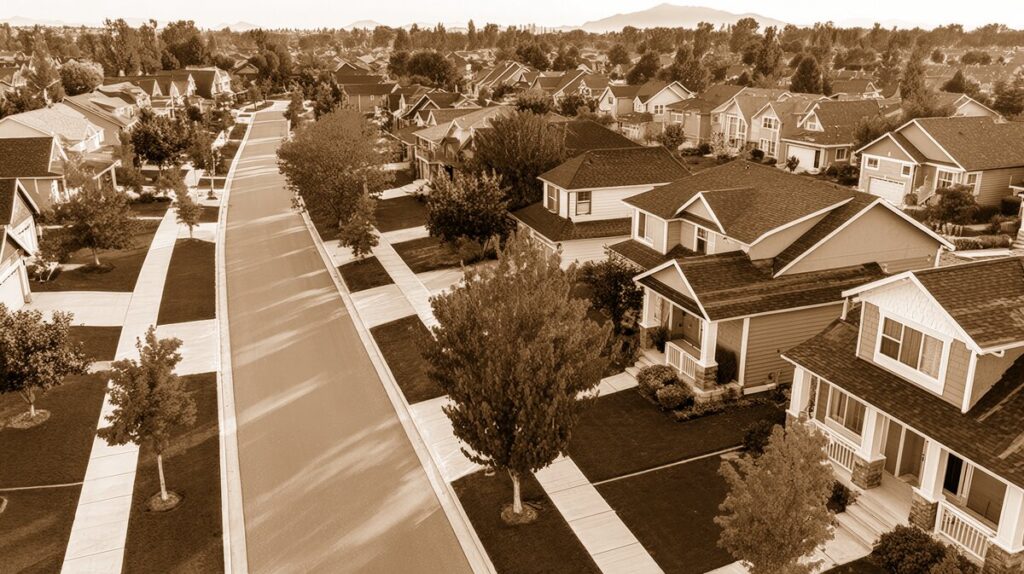
A Neighborhood Shaped by the Land
Canyonview at Candelas is one of those Arvada neighborhoods that feels newer at first glance but is connected to a much older Colorado story. Its streets, homes, and parks were built during the great northwestward growth of the Denver metro area, yet the setting still carries the character of the prairie, foothills, and open country that came before it.
Located in the northwestern part of Arvada near Indiana Street, State Highway 72, and the Rocky Flats National Wildlife Refuge, Canyonview is one of six residential villages within the larger Candelas master-planned community. The villages—Parkview, Mountainview, Canyonview, Valleyview, Townview, and Skyview—were named for the geographic features and views that define their individual settings. Canyonview’s name reflects its relationship to Candelas Canyon Park and the natural canyon landscape nearby. ([candelascommunity.specialdistrict.org](https://candelascommunity.specialdistrict.org/about?utm_source=openai))
For longtime residents, that name is more than a marketing label. It describes what makes the area special: broad skies, changing light on the foothills, and a neighborhood designed to stay visually connected to the land around it.
Before Candelas: Farms, Ranches, and Open Prairie
Long before Canyonview’s first homes were built, this part of Jefferson County was a rural landscape of grassland, ranches, farms, and scattered homesteads. Arvada itself traces its civic history to the late 1850s, when gold discovery along Ralston Creek helped establish the community that would eventually become the city we know today. The western edge of present-day Arvada remained much less developed for generations, with open land stretching toward the foothills and Boulder County.
One important reminder of that earlier era is the historic Church family schoolhouse. The Church family, among the original settlers connected with the land that later became Candelas, donated land and lumber for one of the area’s early schoolhouses. The building still stands near Old Wadsworth Boulevard and West 103rd Avenue, offering a tangible connection to the agricultural communities that preceded today’s subdivisions. ([candelaslife.com](https://www.candelaslife.com/school/?utm_source=openai))
That history is easy to overlook while walking along a modern sidewalk, but it remains part of the area’s identity. The wide spacing of the landscape, the native grasses, and the distant views all hint at a time when neighbors traveled dirt roads, children attended small local schools, and the horizon was largely uninterrupted.
The Candelas Plan Takes Shape
The modern history of Canyonview began with the planning of Candelas as a large mixed-use community. The overall development encompasses roughly 1,451 acres and was designed to include residential villages, parks, trails, schools, open space, and future commercial areas. The formal master plan was filed with Jefferson County in April 2011, marking a major milestone in the transformation of the area. ([en.wikipedia.org](https://en.wikipedia.org/wiki/Candelas%2C_Colorado?utm_source=openai))
Development did not happen all at once. Streets, utilities, parks, and homes arrived in phases, gradually turning an expanse of open land into a connected community. Canyonview became a distinct village within that plan, offering a variety of single-family homes and direct access to trails and views of Candelas Canyon Park. ([cdnc.heyzine.com](https://cdnc.heyzine.com/files/uploaded/v2/2bd65e75eb7087aaa588945917e28fefb22934ff-5.pdf?utm_source=openai))
The neighborhood’s layout reflects a central idea of Candelas: residents should be able to enjoy the outdoors close to home. Roads and sidewalks connect to greenbelts, pocket parks, and the broader trail system. Homes were built in a range of styles, including Craftsman-inspired designs, Colorado mountain architecture, and contemporary interpretations of traditional forms. While the houses are new by Arvada standards, the architectural palette was intended to feel at home in the western landscape.
Why Canyonview Has Its Name
Each Candelas village was given a name based on its surroundings. Parkview emphasizes its relationship to neighborhood parks, Mountainview celebrates Front Range panoramas, and Skyview occupies some of the community’s highest ground. Canyonview is oriented toward the canyon and open-space landscape that gives the village its distinctive outlook.
The name also helps explain the experience of living there. Rather than being arranged as a completely inward-facing subdivision, Canyonview is designed around views outward—to natural drainage corridors, open land, the foothills, and changing Colorado skies. The nearby canyon landscape provides a sense of separation from busier roads and denser development.
That connection to the land is especially noticeable at sunrise and sunset. On clear days, the neighborhood’s western views turn gold, while winter weather can bring a dramatic contrast between snow-covered peaks and the dry prairie below. These everyday scenes are part of the heritage Canyonview is creating for itself.
Parks, Trails, and Community Landmarks
Canyonview’s most important landmarks are not historic brick buildings or century-old storefronts. They are the parks, trails, and shared spaces that have become the neighborhood’s gathering places.
Candelas includes approximately 13.5 miles of trails, allowing residents to walk, run, bike, and explore without leaving the community. The trail system also connects the villages with open-space areas and provides access toward the foothills. Within the larger community are roughly 193 acres of open space managed for recreation, scenery, and wildlife habitat. ([candelascommunity.specialdistrict.org](https://candelascommunity.specialdistrict.org/parks-trails?utm_source=openai))
Several nearby parks help define daily life around Canyonview:
- Sarah George Park includes turf fields, a baseball field, fitness stations, picnic areas, and a pavilion.
- Haystack Plateau Park offers a playground, turf area, park shelter, and tennis and pickleball courts.
- Maverick Mesa Park features a large playground, amphitheater, turf field, and sweeping mountain views.
- Cimarron Park, near the Townview Swim and Fitness Club, provides a playground, open turf, picnic areas, and a small amphitheater.
- Foxtail Pond Park offers a quieter setting with a pond, boardwalks, native grasses, and opportunities to watch birds and wildlife. ([candelascommunity.specialdistrict.org](https://candelascommunity.specialdistrict.org/parks-trails?utm_source=openai))
For many families, these parks serve the same social purpose that an old-fashioned town square once did. Community movie nights, seasonal celebrations, children’s activities, and informal neighborhood gatherings bring residents together throughout the year.
A Community Still Evolving
Canyonview has changed quickly compared with older Arvada neighborhoods, but its evolution is not finished. Early development focused primarily on homes and basic community infrastructure. Over time, schools, recreational amenities, trails, clubs, gardens, and gathering spaces strengthened the sense of place.
Three Creeks K-8 School added an important institutional presence to Candelas, reflecting the community’s transition from a new housing development into an established neighborhood where children can learn close to home. The Candelas Swim and Fitness Clubs, community gardens, parks, and organized events have further encouraged residents to spend time outside their own yards.
The neighborhood’s future will likely bring additional homes, nearby services, and continued refinement of its public spaces. Yet the most valuable part of Canyonview’s heritage may be the balance it has managed to preserve: a modern residential community that still feels connected to open land.
What Makes Canyonview Special
Canyonview at Candelas does not have a long architectural history yet. Its oldest homes are still relatively young, and many of its streets were built within the last couple of decades. But history is not only measured in age. It is also measured in continuity—how a place remembers what came before and how residents shape what comes next.
Here, that continuity can be seen in the old Church schoolhouse, the surrounding prairie, the canyon views, and the trail system that links neighbors to the landscape. Canyonview’s heritage is being written every day through walks along Candelas Parkway, afternoons at neighborhood parks, school drop-offs, community celebrations, and the simple habit of pausing to watch the mountains change color.
That is what makes Canyonview feel special. It is a young neighborhood with an old sense of place—one that honors Arvada’s rural past while creating a welcoming foothills community for the future.